
How Can Art Therapy Help Me Heal from Childhood Trauma?
If you grew up in a home where you had to stay small, stay quiet, or stay alert just to get by, you may have learned early on that being too much (too emotional, too sensitive, too expressive) wasn’t safe.
Now, as an adult, you might find yourself struggling with anxiety, perfectionism, people-pleasing, or feeling disconnected from your body. You might notice that you’re constantly “on,” or that it’s hard to relax, trust, or feel joy.
This can be what the effects of childhood trauma look like—it’s not always dramatic, but it’s deeply woven into everyday life. And it’s possible to change these patterns.
Art therapy offers a gentle and powerful way to begin that healing process. It gives form to what’s been wordless, helps your nervous system find safety again, and reconnects you to parts of yourself that may have gone quiet long ago.
Here’s how.
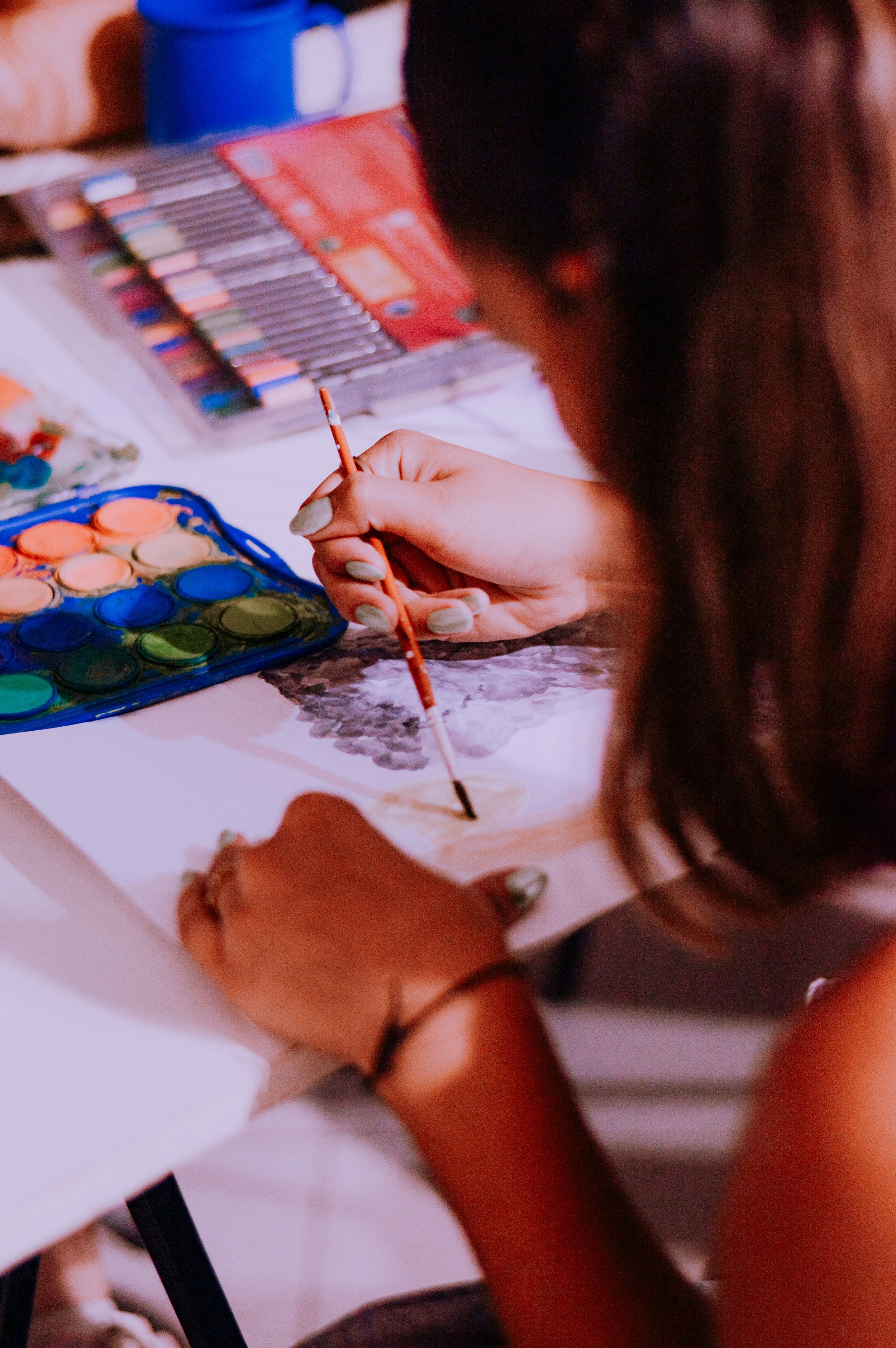
photo by Dámaris Azócar on Unsplash
1. Art therapy helps you express what words can’t
When trauma happens during childhood, our brains often store those experiences in sensations, images, or emotions, rather than words. That’s why talking about it can feel confusing or frustrating, or like you “go blank.”
Art therapy gives those nonverbal parts of you a voice. You don’t need to be good at art; in fact, “bad” art is definitely welcome in the therapy room. You can use colours, shapes, textures, whatever feels right to express what your body remembers.
For example, I might invite you to draw or paint “what you’re noticing in your body right now,” or “what safety might look like.” You don’t have to explain it right away. Often, the image itself communicates something important that words can’t.
This process helps your brain integrate what was once fragmented, slowly making space for more understanding and compassion toward your own experience.
2. Making art helps calm and regulate your nervous system
When you’ve lived through ongoing stress or trauma, your nervous system can get stuck in survival mode—constantly scanning for danger, bracing for impact, or shutting down to cope.
Art making can be a way to practice feeling safe in the present moment. The rhythmic motions of drawing, the smell of pastels, the sound of a pencil on paper—all of these sensory experiences can help communicate to your nervous system, “I’m here now, and I’m safe enough.”
Clients often tell me that while they were creating, their minds quieted down for the first time that day. Maybe they were focused on colour, or the feel of the brush, or simply breathing a bit easier. That kind of presence is powerful for trauma healing because it gives your nervous system an experience of safety.
And if being present feels hard (which it often does after trauma), I’ll gently guide you in noticing what helps you stay with yourself and what doesn’t. There’s no right or wrong, just curiosity and care.
3. Art can hold your experiences safely
Sometimes what we carry inside feels too big, too painful, or too confusing to face head-on. Art can serve as a safe container for those experiences.
Many people describe art therapy like this: they begin the session feeling full of something (maybe grief, anger, or tension) and by the end, it’s as if some of that has moved into the art. The image now holds it, not just their body.
In the picture book Niko Draws a Feeling by Bob Raczka, Niko doesn’t draw objects, he draws feelings. He draws things like “the hard work of a mother robin building her nest.” That’s a perfect description for what happens in art therapy: your feelings take shape in a way that makes them easier to see, understand, and relate to.
When you look at what you’ve created, we can explore together what stands out—gently, at your pace. Art lets you turn toward painful memories while keeping enough distance so you’re not overwhelmed. It’s a way of saying, “This is what I carry,” without being consumed by it.
4. Art therapy helps you reconnect with your whole self
Trauma can leave us feeling cut off—from our bodies, our emotions, our creativity, even our sense of meaning. Art therapy invites those parts back into relationship.
It’s a holistic process that engages your body, mind, and spirit. When you create, you activate both hemispheres of your brain, helping them communicate again. This supports what therapist and neuroscientist Dr. Daniel Siegel calls integration, the process that leads to resilience and well-being.
In practice, this might look like:
noticing where you feel tension or calm in your body while you create
using imagery to explore the part of you that’s still protecting you, or the part that longs for rest
expressing something that words can’t capture, and letting that be enough
Healing doesn’t happen in isolation—it happens through relationship, creativity, and presence.
5. Creativity opens the door to new perspectives
When you’ve been through childhood trauma, it’s common to feel stuck in the same emotional patterns such as people-pleasing, self-criticism, avoidance, or fear of closeness. Art therapy offers a different route in.
Even if you’ve talked about something many times before, creating art about it can unlock new insights. Sometimes a colour, symbol, or texture shows up and surprises you—it’s your inner world communicating in a fresh way.
One client once said after finishing a painting, “I didn’t know I still had hope until I saw it on the page.” Moments like that remind us that healing isn’t about erasing the past, it’s about reconnecting with what’s still alive and possible within you.
What to Expect in a Session
An art therapy session blends conversation with guided creative exploration. You might:
Take a few minutes to ground and notice your body
Choose art materials that feel right for you that day
Create freely while I guide you to stay connected to your experience
Reflect together on what you see or feel afterward
Whatever happens, we’ll go at your pace.
A Gentle Invitation
Healing from childhood trauma takes time, and it doesn’t have to be done through words alone. Art therapy can help you reconnect with your body, express what’s been held inside, and start to experience safety and joy again.
If you’re curious about what art therapy could look like for you, I’d love to meet you for a free 30-minute consultation. Together, we can explore what you need.
FAQs about Art Therapy and Childhood Trauma
How can art therapy help with childhood trauma?
Art therapy helps by giving you a safe way to express experiences that feel hard to put into words. Through colour, texture, and imagery, your nervous system can settle, and you can explore memories and emotions at a pace that feels manageable.
Do I need to be good at art for art therapy to work?
Not at all. Art therapy is about the experience, not the final product. You don’t need any art skills, just curiosity and a willingness to try different materials.
What happens in an art therapy session for trauma?
A session often includes grounding, choosing art materials, creating at your own pace, and reflecting together afterward. You decide how much you want to share. The process blends creativity with somatic (body) awareness to support healing.
Can art therapy help me if talking about trauma feels overwhelming?
Definitely. Sometimes talking about trauma can feel too intense or confusing. Art therapy offers another way to access what you feel without needing to explain everything right away. Your art becomes a container that helps regulate your nervous system and create emotional safety.
